

Did you know that over 75% of people judge a dental practice's credibility based solely on its website design and content? In today’s digital world, your dental web presence can make or break your first impression—and the right dentist website content tips can mean the difference between a thriving clinic and an empty waiting room. This comprehensive guide delivers actionable insights to help your dental website attract, engage, and convert more patients, setting your practice apart in an increasingly competitive marketplace.
Why Dentist Website Content Tips Matter: Surprising Industry Facts
For dental practices, having an impactful online presence is no longer optional. Recent industry reports suggest that nearly 77% of new dental patients discover their dentist through local online searches. Here’s the reality: patients expect informative, easy-to-navigate, and trustworthy dental websites. If your dental website lacks compelling content and modern web design, you risk losing prospective patients to competitors who have invested in better user experience and dental SEO. Furthermore, search engines reward websites that deliver both great content and strong usability, boosting your practice’s visibility in search results. Strategic investment in website content pays dividends—not only in new appointments but in higher trust and retention among your existing patient base as well.
From educational blog posts to clear descriptions of dental services and robust patient testimonials, prioritizing the right website content forms the backbone of growth-oriented dental practices. Establishing your dental practice as a go-to, trusted resource in your community begins with smart, well-structured, and search-optimized web content. By implementing targeted dentist website content tips, you can make sure your dental practice stands out—both for patients and for search engines alike.

What You’ll Learn From These Dentist Website Content Tips
- The core elements of successful dental web design
- SEO strategies for dental websites
- Content structure that converts visitors to patients
- Optimizing your dental website for mobile devices
- Legal and ethical considerations for dental web content
Overview: Dentist Website Content Tips Table
| Best Practice Area | Key Strategies | Benefits | Pro Tip |
|---|---|---|---|
| Dental Website Design | Clean layouts, intuitive menus, strong branding, fast loading times | Immediate trust, easy navigation, increased patient retention | Use calming color palettes for better patient engagement |
| Content Creation | Patient-focused copy, educational blog posts, testimonials | Establishes authority, educates, builds trust with patients | Address common dental concerns in every service page |
| SEO | Relevant keywords, local SEO tactics, meta tags | Improves search engine rankings, drives local traffic | Include service area cities in headings and metadata |
| Patient Engagement | Online booking, chat support, multimedia content | Higher conversions, more appointment requests | Use patient success videos to inspire trust |
As you refine your dental website content, it's also valuable to stay informed about the latest trends and headlines impacting small businesses in the healthcare sector. For timely updates and practical insights that can influence your digital strategy, consider exploring current business headlines relevant to dental practices and other local service providers.
Understanding the Foundation: Dental Website Design Essentials
A powerful dental web presence starts with strong website design. Your dental website serves as the digital front door of your practice, influencing how potential patients perceive your professionalism, reliability, and commitment to care. To help your practice grow and stand out, focus on website design elements like mobile responsiveness, intuitive navigation, and effective use of color and branding. A thoughtfully designed website not only looks appealing but also enhances user experience, driving higher engagement and encouraging more visitors to become patients.
Modern web design for dental practices goes beyond aesthetics. It helps search engines index your site more effectively, directly impacting your search result rankings. An effective dental website should build trust from the moment a potential patient lands on the page, providing clear pathways to important information such as dental services, team bios, and contact forms. Investing in professional dental web design signals that your practice values excellence, both online and offline.
Importance of First Impressions in Dental Web Design
First impressions play a crucial role in connecting with prospective patients. Studies reveal that website visitors form an opinion about your dental practice within 0. 05 seconds of landing on your homepage. A clean, modern layout with easy-to-read fonts and soothing color schemes instantly conveys a sense of professionalism and care—a core element of any successful dental website. Visual appeal alone, however, isn’t enough: your web design should also highlight your key services, team, and unique selling points in an accessible, user-friendly manner.
Incorporate authentic imagery, introduce your dental team, and ensure your navigation is logical and efficient. These design choices not only enhance patient trust but also positively impact your dental SEO. Remember, effective website design can mean the difference between a patient scheduling an appointment or moving on to a competitor’s site.
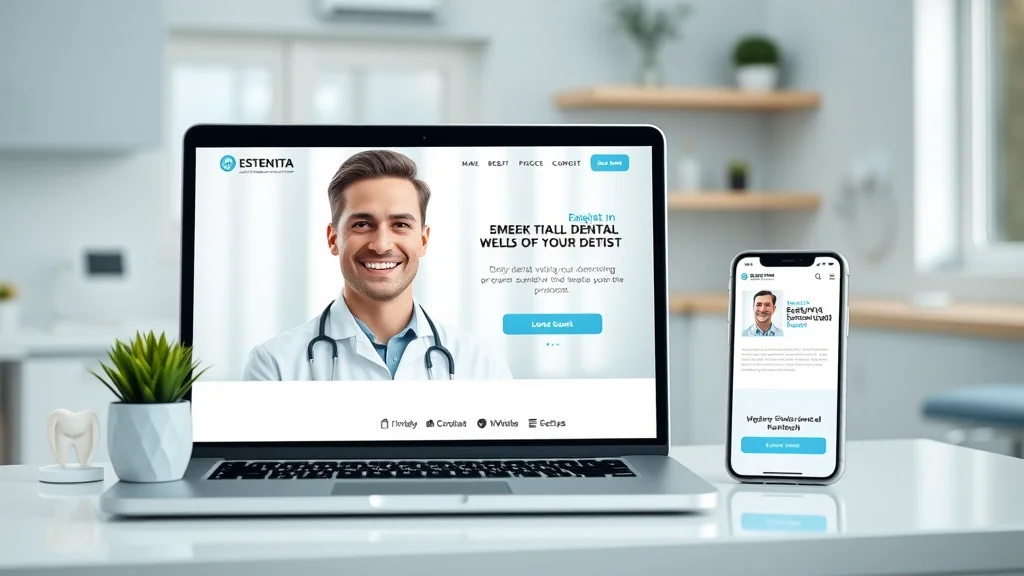
How to Choose the Right Dental Website Design for Your Practice
Deciding between template-based options and custom web design solutions can rate as one of the most critical choices for your dental web. Templates are fast, cost-effective, and offer pre-built functionality, but may lack unique branding options. Custom-designed websites, however, allow you to control every aspect of your practice’s digital presence—from color psychology (calm blues to promote trust, soft greens for cleanliness) to imagery reflecting your team’s expertise and approachability. Carefully consider your dental practice’s brand personality, core values, and target patient demographic before making a decision.
- Templates vs. Custom web design
- Branding considerations for dental web
- Color psychology for dental practices
Aligning web design decisions with your marketing goals sets your dental website apart. Whether you use a template or invest in a custom site, prioritize high functionality, fast loading times, and clean design to ensure your online presence supports your practice's growth and reputation.
Designed Website Elements: Must-Haves for Dental Practice Sites
- Clear calls to action
- Contact forms and online booking
- Patient testimonials and social proof
Effective dental websites don’t just look good—they function as powerful marketing tools. Essential elements like bold calls to action (“Book Your Appointment Today”), easy-to-use contact forms, and online scheduling integrate seamlessly into your user experience. Don’t underestimate the power of patient testimonials and social proof in building trust; prospective patients are more likely to choose your practice if they can see real experiences and success stories from your satisfied clients. Use engaging photos and clear, accessible reviews to boost both credibility and engagement.
Crafting Dentist Website Content That Converts
Content is king—especially for dental websites. The right content doesn’t just inform; it inspires trust and turns visitors into lifelong patients. By focusing on clarity, transparency, and a tone that resonates with concerns and needs, dental web content bridges the gap between cold information and warm, engaging conversation. When writing website content for your dental practice, always keep your audience—prospective patients—in mind, highlighting how your services address their unique situations and anxieties.
Successful content blends clinical expertise with approachability. Include detailed information on your dental services, introduce your team members, and offer educational resources like blog posts and FAQs. Utilizing a transparent, patient-centered tone establishes authority and sets your dental website apart in search engine results and patients’ minds alike.
Writing for Dental Websites: Tone, Trust, and Transparency
“The best dental websites speak directly to patient concerns while showcasing expertise.”

When crafting copy for your dental web presence, focus on clarity, warmth, and reassurance. Avoid jargon and communicate procedures, pricing, and patient expectations in plain language. Trust is built through transparent information—be upfront about common dental concerns, the steps involved in common procedures, and aftercare instructions. Authenticity wins: introduce your dental team, share their certifications, and give real insight into treatment philosophy and patient experience.
Using a friendly, knowledgeable tone—combined with honest case studies and clear explanations—addresses patient anxieties and sets your dental practice apart. Remember, every page should reinforce your practice’s dedication to safety, excellence, and compassionate care, yielding better results both for patient satisfaction and search engine optimization.
Essential Pages for Every Dental Web Presence
- Homepage
- About Us
- Dental Services
- Team/Staff Page
- Contact Information
- Testimonials
Each essential page serves a unique, critical purpose. The homepage anchors your brand and funnels visitors to key areas. An About Us page humanizes your dental practice, introducing your team and philosophy. Dental Services should detail all procedures with patient-friendly explanations, while Contact Information and online booking forms remove barriers to appointment scheduling. Patient testimonials and success stories act as social proof, reinforcing the quality and compassion of care new visitors can expect in your practice.
Dental SEO: Dentist Website Content Tips for Better Rankings
Without strong dental SEO strategies, even the most beautifully designed website risks being overlooked. Dentist website content tips must include a focus on search engine optimization to ensure your dental practice appears at the top of search results when prospective patients look for dental services in your area. Blending relevant keywords naturally into your copy, building robust local landing pages, and optimizing all technical elements—from meta titles to site speed—are all key to building effective dental SEO.
Focus on on-page SEO best practices: use clear heading structures, keyword-rich service descriptions, and locally focused content to help search engines understand and prioritize your web presence. This approach not only increases web traffic but also ensures that the right people—those seeking dental care now—find and trust your practice above all others in search.
Using Keywords Effectively for Dental Services and Local SEO
- On-page SEO practices for dental websites
- Geographical keywords for dental practices
- Meta title and description writing for dental web
Effective SEO starts with understanding the search intent of your future patients. Incorporate targeted dental keywords (such as “family dentist in [Your City]” or “emergency dental care near me”) in headings, page copy, meta descriptions, and alt text. Write clear, compelling meta titles and descriptions for every page—a step that not only helps you rank high but also improves click-through rates from the search result page. Local SEO strategies ensure your dental practice shows up in “near me” searches, driving more relevant, appointment-ready traffic to your site.
Regularly update your dental website with blog posts centered around trending patient concerns and educational topics. This not only boosts keyword relevancy but also signals to search engines that your site is active and authoritative, further strengthening your search engine rankings.

Content Marketing Ideas for Dental Practices
- Authoring educational blog posts
- FAQ sections addressing common dental concerns
- Patient success stories
Content marketing for dental practices shouldn’t stop at static pages. Engage prospective patients and boost social media visibility by publishing educational blog posts, video tutorials, and FAQs that demystify everything from teeth whitening to root canal recovery. Highlighting patient success stories—whether written or as video testimonials—provides powerful proof of your expertise and compassion. This approach draws in organic traffic, helps establish authority in your community, and amplifies your presence across multiple digital channels.
Encourage satisfied patients to share their experiences both on your website and on third-party review platforms. Combine written content with short video clips and before-and-after images to further enhance credibility and build stronger, trust-based relationships online.
Mobile Devices and Usability: Designing Dental Websites for All Visitors
More than 65% of patients browse dental websites on their mobile devices. That’s why every modern dental web must be optimized to deliver seamless, fast, and accessible experiences across smartphones, tablets, and desktops. A mobile-responsive website not only serves your visitors better but also helps you rank higher in search engine results, as search engines prioritize mobile-friendly content in their algorithms. Investing in mobile usability is vital for any dental practice seeking growth.
Responsive web design ensures that your content, imagery, and navigation automatically scale and reformat for any screen size. Prioritize large, clickable buttons, concise forms, and fast loading speeds so that potential patients can easily contact you or book an appointment—regardless of device.
Responsive Web Design for Dentists

A responsive dental website adapts smoothly from desktop displays to the smaller screens of mobile devices, keeping navigation intuitive and ensuring important information is never hidden. This kind of mobile-friendly web design isn’t just user-friendly—Google now actively prefers and boosts sites that load quickly and look great on every device, thanks to mobile-first indexing. That means your dental practice can rank higher and reach more potential patients actively searching for care “on the go. ”
Responsive design combines flexible grids, scalable images, and dynamic elements. Make sure essentials like click-to-call buttons, address details, and online booking forms are prominent. Ultimately, it’s about delivering an experience that’s just as seamless and positive from a phone as it is from a desktop browser.
Accessibility Standards for Dental Web Design
- ADA compliance in dental websites
- Contrast and font choices for legibility
Accessibility is a legal and ethical priority for all dental websites. ADA-compliant web design ensures that visitors with disabilities can fully access and benefit from your digital practice—something search engines increasingly reward as well. Use high-contrast color schemes for readability, selected font styles and sizes that support easy reading for all ages, and alt text for all images to assist screen readers.
Incorporate keyboard navigation, proper heading structures, and error-free forms throughout your dental website. Compliance not only protects your practice from potential legal complications but also demonstrates your commitment to inclusivity—an attribute valued by both patients and search engines alike.
Engaging Dental Website Content: Multimedia and Video
Visuals play a powerful role in making your dental website content memorable and engaging. Vibrant, authentic images of your team, your facilities, and your patients (with consent) help break down barriers of anxiety and uncertainty. Videos—such as office tours or patient testimonials—can humanize your practice and offer a compelling glimpse into your team’s expertise, compassion, and care. This multimedia strategy brings your dental web content to life, encouraging patients to take the next step and book an appointment.
When done right, integrating photos and videos can also support your dental SEO. Alt text with relevant keywords further enhances your search engine optimization, making it easier for search engines to index your practice and rank you higher for local queries. The more interactive and visually appealing your dental website is, the stronger your online presence becomes.
Impact of Images and Videos on Dental Practice Websites

High-quality visuals showcase your office environment, technological advancements, and friendly staff. Patients feel more at ease when they can see real photos of where they’ll be treated and who will take care of them. Videos walk patients through the treatment process and set realistic expectations, while also giving a face and personality to your practice. Visual storytelling creates a connection that’s hard to achieve through text alone.
Strategically placed multimedia elements can increase the average time users spend on your website—a strong signal to search engines that your dental website content is both valuable and relevant. As patients browse, subtle touches like team introductions and office tours build a sense of familiarity, gently guiding them toward making an inquiry or booking an appointment.
Video Section: Welcome Tour of Your Dental Practice
Bring your dental practice’s story to life with a virtual video tour. Feature welcoming front desk greetings, candid smiles from your team, and behind-the-scenes glimpses of treatment rooms. Showcase your state-of-the-art equipment and patient-first approach—this visual content positions your practice as transparent, welcoming, and technologically advanced, all while answering common questions before patients ever walk through your door.
Legal, Ethical, and Security Considerations for Dentist Website Content
Trust in your digital presence also depends on your commitment to legal, ethical, and security standards. Dentist website content tips must include strict measures for safeguarding patient data, especially in compliance with HIPAA regulations. Secure appointment forms, encrypted communications, and transparent privacy policies are non-negotiable features of any responsible dental website. Furthermore, ethical marketing—such as honest representation of results, accurate credentials, and clear patient consent for testimonials—sets your practice apart as a trustworthy leader in the dental industry.
The consequences of neglecting legal and ethical standards can be severe, with potential financial penalties and loss of patient confidence. Investing in robust digital security and truthful communications ensures your site doesn’t just convert visitors but builds long-term loyalty and trust in your dental practice.
HIPAA Compliance for Dental Websites
- Safeguarding patient data online
- Best practices for online forms and appointment bookings

HIPAA compliance is a cornerstone of dental web content. Every form on your site—whether for appointments, patient questions, or contact requests—should be protected through SSL encryption and secure storage solutions. Limit the collection of sensitive data to only what’s necessary and clearly explain how patient information will be used, stored, and protected. Regular reviews of your data handling practices, privacy policies, and staff training play a vital role in maintaining compliance and patient confidence.
Online appointment bookings should incorporate multi-factor authentication and clear consent fields. These practices not only comply with regulations but also demonstrate your dedication to patient safety, positively impacting your reputation and reinforcing patient loyalty.
Ethical Marketing and Accurate Information
Ethical marketing is about more than compliance—it’s about transparency and integrity. Represent your services, pricing, and results honestly, avoiding exaggerated claims. Never use misleading before-and-after photos or testimonials without documented consent. Clearly display practitioner credentials, affiliations, and accreditations on your dental website, and proactively update your content to correct any outdated or incorrect information.
Clear and accurate information ensures new and returning patients can trust your site and your services. Ethical dental web content is not only good business—it’s the right thing to do, further reinforcing your practice’s standing in both the local community and search engine rankings.
People Also Ask: Common Questions About Dentist Website Content Tips
What are the must-have features of a modern dental website?
Modern dental websites should prioritize a clean, responsive design, clear calls to action, and easy navigation. Essential features include mobile optimization, online booking forms, staff bios, detailed dental services pages, ADA-compliant accessibility, and strong security for patient data. Patient testimonials, frequently asked questions, and multimedia content like photos and virtual tours can help reinforce your brand and build trust.
How can dentist website content educate and reassure patients?
Educational content—like blog posts, service explanations, and FAQ sections—demystifies common procedures and addresses patient anxieties. Sharing patient stories, step-by-step treatment guides, and dental health tips builds trust. Providing transparent information about your technology, safety protocols, and qualifications reassures visitors and guides them toward becoming loyal patients.
How does mobile responsiveness impact dental web conversions?
A fully responsive dental website ensures seamless browsing across all devices, making it easy for patients to find information and book appointments on the go. Sites that adapt well to mobile devices keep users engaged and decrease bounce rates, directly increasing appointment requests and overall patient conversions—while also boosting dental SEO performance.
Measuring Success: Analyzing Dental Web Performance
Creating stellar website content is only part of the equation; tracking and refining your dental web strategy ensures ongoing patient growth. Regularly assess your website’s performance through analytics, looking at metrics like bounce rates, page load speeds, average session duration, and conversion rates. This data-driven approach allows you to pinpoint what’s working and where improvements can be made, increasing your return on investment in dental marketing and search engine optimization.
Implement A/B testing for critical pages—such as homepages and appointment forms—to optimize conversion rates. With each tweak and enhancement, your dental web presence becomes more effective, helping your practice grow and adapt to changes in patient behavior and search engine algorithms.
Using Analytics to Fine-Tune Your Dental Website Content
- Key metrics to monitor (bounce rate, conversions, traffic sources)
- Continuous improvement with A/B testing

Google Analytics, Hotjar, and similar tools provide actionable insights that help dental practices continually improve their online presence. Monitor bounce rate to understand which pages cause visitors to lose interest. Track conversions to see how many visitors turn into appointment bookings. Analyze traffic sources to focus your marketing company’s budget on the most effective channels. Regular reviews—paired with split tests and feedback from patients—ensure that your dental web content remains current, compelling, and perfectly aligned with patients’ needs.
Expert Quotes: Insights on Effective Dental Website Content
“A patient-centric dental website is your most valuable marketing asset.” — Industry Expert
This expert perspective underscores the central role your dental website plays in attracting, educating, and retaining patients. By prioritizing user experience, trustworthy information, and ongoing improvements, your dental web can drive measurable practice growth now and in the future.
Lists: Dentist Website Content Tips Checklist
- Optimize every page for SEO
- Prominently display your dental services
- Feature authentic testimonials and case studies
- Ensure fast page loads on all devices
- Secure all patient communications
FAQs: Dentist Website Content Tips
What are the must-have features of a modern dental website?
Essential features include a mobile-responsive layout, intuitive navigation, clear calls to action, secure online booking, dental service details, authentic staff bios, and strong SEO elements such as keyword-rich headings and meta tags.
How can dentist website content educate and reassure patients?
Dental website content should answer frequently asked questions, explain dental procedures in easy-to-understand language, and provide educational resources through blog posts or videos, helping patients feel informed and less anxious.
How does mobile responsiveness impact dental web conversions?
Mobile-friendly dental websites make it seamless for patients to browse, find vital information, and book appointments on any device. This leads to longer time on site, fewer drop-offs, and higher appointment conversions.
Key Takeaways: Dentist Website Content Tips
- Prioritize patient-centric content and visuals
- Leverage SEO for higher local ranking
- Invest in responsive and secure website design
Video Section: Patient Testimonial Compilation
Hearing directly from real patients fosters authenticity and trust. Feature a series of video testimonials on your dental website, highlighting positive experiences, transformations, and expressions of confidence in your care. This strategy informs, reassures, and motivates potential patients to take action.
Elevate Your Dental Practice: Put These Dentist Website Content Tips Into Action
Start implementing these dentist website content tips today to elevate your online presence, attract more patients, and ensure your practice thrives. From design and content to compliance and analytics, your website is the cornerstone of success in modern dentistry.
As you continue to refine your dental website and digital marketing approach, remember that staying ahead means keeping an eye on the broader business landscape. Exploring resources like Small Business Today’s business headlines can provide you with strategic perspectives and emerging trends that impact not just dental practices, but the entire small business community. By integrating these wider insights with your dental content strategy, you’ll be better equipped to adapt, innovate, and lead in a rapidly evolving marketplace. Take the next step in your growth journey by leveraging both industry-specific tactics and big-picture business intelligence for lasting success.





Write A Comment