

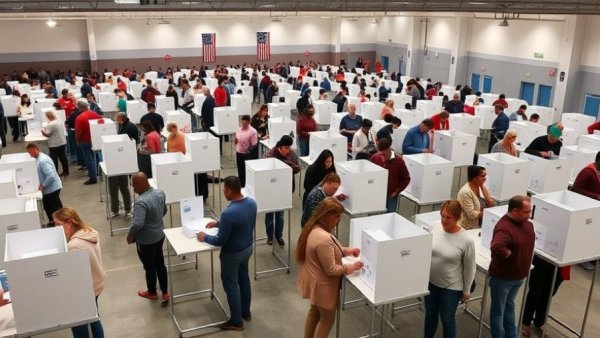
Assessing Market Sentiment Post-Midterm Elections
The recent midterm elections have set a new stage for U.S. markets, as investors and business leaders react to the Democratic party taking control of both congressional chambers. In these politically charged times, Kenny Polcari, a well-known market strategist, predicted a positive trajectory for the stock market over the next year. He draws upon historical trends, noting that the stock market has generally shown an uptick in performance in the year following midterms, supported by past instances where significant political shifts resulted in increased investor confidence.
Balance of Power: Opportunity or Challenge?
Amid debates about what the new political landscape means for economic stability, there remains a sharp divide in perspectives. Some experts, like Deborah Cunningham, argue that a divided government—where Democrats hold power in Congress while Republicans occupy the White House—could lead to reduced legislative strife. This reduction in conflict may limit risks related to sweeping policy overhauls, giving businesses a predictable regulatory environment crucial for planning and investment. The historical context here cannot be understated; many investors believe that divided government can act as a stabilizing force in uncertain times.
AI and Data Center Development Under Scrutiny
While general optimism exists in some sectors, apprehensions loom over regulations pertaining to artificial intelligence (AI). The potential for tighter scrutiny on AI investments has unnerved many tech investors, particularly when it comes to data centers which require significant energy and water resources to operate effectively. Business executives and analysts are closely monitoring early signs from newly elected officials, such as Texas Governor-elect Gina Hinojosa, who recently campaigned on maintaining a moratorium on new data center construction until the impacts on local resources can be adequately assessed.
Elon Musk, known for his outspoken and humorous commentary, recently quipped about his interest in space-based data centers, echoing wider industry concerns regarding land-intensive AI projects. His remarks were a reflection of the trepidation felt in the tech sector. Although some industry leaders downplay these concerns, suggesting that fears of an abrupt halt to AI infrastructure expansion may be exaggerated, the looming specter of new regulations altering project timelines has left investors and companies on edge. Musk's comment, "Data centers in space looking pretty appealing right now," resonated widely, emphasizing the ongoing tension between innovation and regulatory concerns.
Global Business Leaders Weigh In
In light of the election results, opinions from various international business leaders highlight the crucial need for a stable political framework for successful company operations. For instance, Stefan Schulte, CEO of German airport operator Fraport, suggested that a predictable regulatory environment would not only support the stability of domestic firms but could also foster growth across multiple sectors, including travel and tourism. He noted that a stable economic landscape is important for global competitiveness, especially as industries rebound from the disruptions caused by the pandemic.
Further emphasizing this view, Continental's CFO articulated that increased stability and predictability in regulations could be welcomed across various U.S. sectors. "What we need as a company in the U.S. is stability and a reliable economic framework," Welzbacher said. He believes that businesses will thrive in environments where they can confidently project their growth plans without the fear of sudden legislative changes.
Future Economic Trends: What Lies Ahead?
As investors and analysts take stock of the midterm results, many are actively strategizing to leverage potential shifts in policy and business climate. The focus now turns to infrastructure: how can companies maintain economic predictability to bolster market resilience? Investors are keenly interested in how forthcoming policies will specifically impact innovation and growth across critical sectors such as technology, travel, and business operations.
These developments point to a pivotal moment in the U.S. economy, especially as businesses must prepare to adapt to the evolving landscape. The road ahead could present both challenges and opportunities; companies that can proactively adjust to changes driven by new legislation may find themselves at a competitive advantage.
A Outlook on Regulation Impacting Business
As the country moves forward under a Democratic Congress, businesses will need to brace themselves for the potential of more stringent regulations on emerging technologies, such as AI and data centers. The onus will be on companies to develop strategies that align with new regulatory frameworks, emphasizing adaptability and resilience. Keeping a keen eye on legislative developments will be essential; how businesses respond to the shifts initiated since the midterms may well dictate their success in navigating a landscape that is rife with both challenges and opportunities.
Final Thoughts: Navigating Changes in the Market
The midterms have undoubtedly introduced new dynamics to the U.S. market landscape. For business leaders and investors alike, understanding the nuances of these changes will be key in strategizing for the future. While concerns about heightened oversight surrounding technology investments linger, there exists an underlying belief that the stability offered by political equilibrium will foster an environment conducive to growth across various sectors. As industries continue to adapt to these new realities, a cautious yet optimistic approach may serve as the best strategy moving forward.







Write A Comment